
Learning and Innovation Fund (LIFT)
BACKGROUND
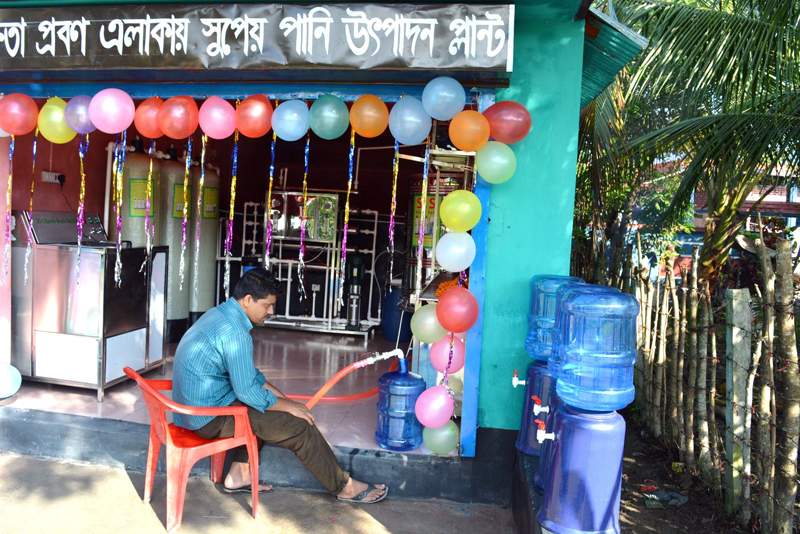
Bangladesh is vulnerable to water insecurity partially because of its environmental circumstances. Being a low-lying deltaic country of exceptionally dense population, Bangladesh is susceptible to a variety of environmental stresses and natural disasters; these stresses can exacerbate the difficulties in accessing potable water. For example, south-west Bangladesh was severely impacted by cyclone Aila in 2009; and many drinking water sources were inundated with saline tidal water and became unusable. Rural Reconstruction Foundation has planted 07 desalination plants in Rampal and Morrelgonj Upazilla of Bagerhat District With a view to reducing the shortage of portable water in salinity prone areas. PKSF supported “Water Desalination Project” has been started from June, 2016 aiming to arrange long-lasting and fixed source of portable water for the community people through installing Reverse Osmosis Water plant. The deprived people of salinity prone areas especially in Bagerhat district are targeted to provide drinkable water. PKSF has taken measures to provide potable drinking water in the said areas at a very affordable cost under the CCCP and LIFT project.
Objective
# Developing the physical condition of the people in salinity-prone areas and preventing water-borne diseases and health loss by drinking potable water.
# Arrange scope to drink potable water among community people and students from the different educational institutions of the project area.
# Obtaining the capacity to participate in committees and manage to supply potable water in order to reduce the shortage of drinking water.
|
Upazila |
Union |
Name of Plant |
Name of Project |
Total production (Liter) |
|
Rampal |
Sadar |
Sreefaltala |
LIFT |
28,69,00 |
|
Sadar |
Papulbuniya |
CCCP |
2,97,400 |
|
|
Morrelganj |
Doibogghati |
Doibogghati |
LIFT |
3,02,660 |
|
Sonakhali |
Sonakhali |
CCCP |
84,595 |
|
|
Hoglapasha |
Hoglapasha |
CCCP |
76,950 |
|
|
Bonogram |
Abata |
CCCP |
1,64,940 |
|
|
Boloibuniya |
Dona |
CCCP |
1,56,000 |
|
|
Total Production |
13,69,445 |
|||
Highlights
* From 2016 this project began
* 1369445 liters of drinking water have been produced
* 07 water plant has
* 16100 beneficiaries given support in 2017-18
* 938 jars and 732 dispensers were used
* Supported by PKSF